Genuine Old Polish Bigos: Difference between revisions
Created page with "{{Data|7 January 2019}} The Christmas-carnival period is a time when Poles eat particularly large amounts of ''bigos'' -- a dish that you can prepare in amble quantity in adva..." |
No edit summary |
||
| Line 1: | Line 1: | ||
{{Data| | {{Data|XXX January 2019}} | ||
The Christmas-carnival period is a time when Poles eat particularly large amounts of | The Christmas-carnival period is a time when Poles eat particularly large amounts of bigos -- a dish that you can prepare in amble quantity in advance, then freeze it (formerly, by simply storing it outside; today, in a freezer) and then reheat it multiple times, which -- it is known -- only improves the flavour. Bigos (pronounced ''<small>BEE</small>-gawss'') is commonly regarded one of the top dishes in the Polish culinary canon; one would be hard pressed to name a more typically Polish food. This is how American food historian William Woys Weaver described it: | ||
{{cytat | {{cytat | ||
| Bigos | | Bigos is one of those Polish dishes that has been romanticized in poetry, discussed in its most minute details in all sorts of literary contexts, and never made in small quantities. Historically, it was served at royal banquets or to guests at meals following a hunt. It was made invariably from several types of game and served during winter. Bigos has gradually assumed the character of a Christmas and Easter dish in Poland, and today recipes are as varied and as complex as any Italian recipe for tomato sauce. In fact, some Poles even add tomato sauce to the mixture. (It does no need it.) | ||
| źródło = Dembińska; Weaver (1999), | | źródło = Dembińska; Weaver (1999), p. 169 | ||
}} | }} | ||
But is the ''bigos'', as we know it today, really the ancient and specifically Polish dish we take it to be? | |||
== ''Beigießen'' == | == ''Beigießen'' == | ||
I'm sorry to report that etymologists agree: this epitome of Polish cuisine is referred to by a word of foreign, non-Slavic and -- what's even worse -- German origin! They are not certain, though, which German word exactly the Polish ''bigos'' derives from, but they have no doubt that some German word it is. Aleksander Brückner, a famous prewar scholar of Slavic languages, maintained that ''bigos'' comes from German ''Bleiguss'', or "lead mold". The idea was that if you pour molten lead on water (as many Poles still do with wax for divination on Saint Andrew's Eve) you get a shape that resembles bigos. Other linguists are quite unanimous in their view that this etymology makes no God damned sense. | |||
Suggestions that are somewhat more logical from a culinary point of view include the archaic German verb ''becken'', "to chop", and the Old German noun ''bîbôz'' (or ''Beifuss'' in modern parlance), which refers to mugwort, a plant once used for seasoning. Others propose the Italian ''bigutta'', or "pot for cooking soup", which supposedly entered Polish via German. But the etymology considered most likely is that ''bigos'' derives from ''bîgossen'', an archaic form of the participle ''beigossen'', from the verb ''beigießen'', "to pour". To make a long story short, bigos is something to which someone (probably some German) has added some kind of liquid. | |||
== ''Minutal alias'' siekanka == | == ''Minutal alias'' siekanka == | ||
Revision as of 21:59, 10 January 2019
The Christmas-carnival period is a time when Poles eat particularly large amounts of bigos -- a dish that you can prepare in amble quantity in advance, then freeze it (formerly, by simply storing it outside; today, in a freezer) and then reheat it multiple times, which -- it is known -- only improves the flavour. Bigos (pronounced BEE-gawss) is commonly regarded one of the top dishes in the Polish culinary canon; one would be hard pressed to name a more typically Polish food. This is how American food historian William Woys Weaver described it:
| Bigos is one of those Polish dishes that has been romanticized in poetry, discussed in its most minute details in all sorts of literary contexts, and never made in small quantities. Historically, it was served at royal banquets or to guests at meals following a hunt. It was made invariably from several types of game and served during winter. Bigos has gradually assumed the character of a Christmas and Easter dish in Poland, and today recipes are as varied and as complex as any Italian recipe for tomato sauce. In fact, some Poles even add tomato sauce to the mixture. (It does no need it.) |
| — Dembińska; Weaver (1999), p. 169 |
But is the bigos, as we know it today, really the ancient and specifically Polish dish we take it to be?
Beigießen
I'm sorry to report that etymologists agree: this epitome of Polish cuisine is referred to by a word of foreign, non-Slavic and -- what's even worse -- German origin! They are not certain, though, which German word exactly the Polish bigos derives from, but they have no doubt that some German word it is. Aleksander Brückner, a famous prewar scholar of Slavic languages, maintained that bigos comes from German Bleiguss, or "lead mold". The idea was that if you pour molten lead on water (as many Poles still do with wax for divination on Saint Andrew's Eve) you get a shape that resembles bigos. Other linguists are quite unanimous in their view that this etymology makes no God damned sense.
Suggestions that are somewhat more logical from a culinary point of view include the archaic German verb becken, "to chop", and the Old German noun bîbôz (or Beifuss in modern parlance), which refers to mugwort, a plant once used for seasoning. Others propose the Italian bigutta, or "pot for cooking soup", which supposedly entered Polish via German. But the etymology considered most likely is that bigos derives from bîgossen, an archaic form of the participle beigossen, from the verb beigießen, "to pour". To make a long story short, bigos is something to which someone (probably some German) has added some kind of liquid.
Minutal alias siekanka
Problem jest taki, że od kiedy tylko słowo "bigos" pojawiło się w języku polskim, to miało ono więcej wspólnego z siekaniem niż z dolewaniem. Najstarsza znana wzmianka to przepis na bigos z zielnika Stefana Falimirza wydanego w Krakowie w 1534 r. pod tytułem O ziołach i mocy ich. Było to dzieło medyczne, a nie książka kucharska, a ów najstarszy znany bigos był nie tyle potrawą, co lekarstwem "naprzeciw św. Walentego niemocy", czyli przeciw epilepsji.
| Może też, opłukawszy płuca wilcze winem czystym, potem je uwarzyć zsiekawszy na bigos i okorzenić pieprzem, imbirem, goździkami, szafranem, a to jeść przez kilka dni. Jest rzecz doświadczona na jednej białej głowie. |
| — Falimirz, Stefan, O ziołach, oprac. Anetta Luto-Kamińska, Krzysztof Opaliński |
Możemy tu dostrzec dwie rzeczy: po pierwsze, wymagania co do liczebności grupy pacjentów objętych badaniem klinicznym w XVI w. były znacznie bardziej liberalne niż teraz. A po drugie, bigos nie musiał wcale zawierać kapusty, ani różnych rodzajów mięsa. Żeby mieć bigos, wystarczyło usiekać coś (choćby i wilcze płuca) i doprawić to na kwaśno, słodko i ostro. W słowniku polsko-łacińsko-greckim z 1621 r. podano taką oto jego definicję:
| ||
| — Cnapius, Gregorius (1643, wyd. drugie) Thesaurus polonolatinogræcus, Kraków, s. 30 |

A więc bigos to inaczej siekanka. Wszystko jasne. Ale co to takiego minutal? Okazuje się, że potrawę z siekanego mięsa zaprawianą na słodko-kwaśno robili już starożytni Rzymianie. Przepisy na minutal możemy znaleźć na przykład w przypisywanej Apicjuszowi książce kucharskiej De re coquinaria (O sztuce kulinarnej), która w rzeczywistości jest zbiorem receptur różnych rzymskich autorów zebranych w IV–V w.n.e. Poniżej instrukcja, jak przyrządzić minutal ex praecoquis, czyli siekaną wieprzowinę z morelami:

| Do garnka wlej oliwę, sos rybny i rozcieńczone wino. Dodaj posiekaną suszoną szalotkę oraz pokrojoną w kostkę podgotowaną łopatkę wieprzową. Ugotuj to wszystko z kruszonym pieprzem, kminem, suszoną miętą i koperkiem. Dodaj miodu, sosu rybnego [znowu], wina z rodzynek, octu oraz wywaru z gotowanego mięsa i zamieszaj. Dorzuć wypestkowane morele i doprowadź ponownie do wrzenia. Zagęść pokruszonym podpłomykiem, posyp pieprzem i podaj. |
| — Apicius, De re coquinaria, tłum. własne |
W Internecie znalazłem ciekawą próbę odtworzenia tego przepisu. Autor bloga Pass the Garum poświęconego gotowaniu według dawnych rzymskich receptur podpowiada, że zamiast likwamenu, czyli rzymskiego sosu rybnego, można z powodzeniem użyć mieszanki tajskiego nam pla i zredukowanego soku z białych winogron, a kruszone tracta, czyli rzymskie podpłomyki, można zastąpić mąką kukurydzianą.
A oto polski przepis na "bigos jezuicki" z rękopiśmiennej książki kucharskiej z dworu książąt Radziwiłłów z końca XVII w.:
| Weź pieczenią dobrą wołową przerastałą, upiecz ją pięknie, a polewaj masłem onę często. Kiedy się upiecze pięknie, pokrajać w niemałe sztuki, nakrajże cybuli niemało i smaż ją w maśle. W panew rybną piękną włóż ten bigos i cybulę. Wlejże wina kwartę, octu pół kwarty winnego, małmazjej pół kwarty. Rozynków drobnych i wielkich wsyp, limonię całą w talerzyki [plasterki] wkraj, oliwek garść, cukru przygarstnie, pieprzu wsypać, coby było dobrze korzenno, goździków całkowych kilka, pieprzu całkowego trochę, cytryny świeżej w kostkę, masła młodego łyżek dwie. Niechże wre dobrze w panwi, coby jeno trochę polewki [sosu] było. |
| — Dumanowski, Jarosław; Jankowski, Rafał, red. (2011) Moda bardzo dobra smażenia różnych konfektów, Monumenta Poloniae Culinaria, Warszawa, Muzeum Pałac w Wilanowie, s. 139 |
No i pięknie! Przepis, jak widać, dość podobny do tego na rzymski minutal, choć wieprzowinę zastąpiono tu bardziej cenioną przez polskich magnatów wołowiną. Znowu mamy tu połączenie smaków kwaśnych (wino, ocet winny, limonka, cytryna), słodkich (cukier, rodzynki, małmazja), korzennych (pieprz, goździki, więcej pieprzu) oraz tłustych (masło, oliwki i więcej masła). Ta kombinacja smakowa, która nie zmieniła się od czasów starożytnych, powtarza się we wszystkich polskich przepisach na bigos (i nie tylko) z tej epoki.

Co ciekawe, staropolski bigos nie tylko nie zawierał ani grama kapusty, ale nawet mięso było w nim opcjonalne. Jeśli "bigos" znaczył tyle co "siekanka", to można go było zrobić ze wszystkiego, co tylko da się posiekać. Obok bigosów z cielęciny, kapłonów (kastrowanych kogutów), skopowiny (kastrowanych baranów), królika, jarząbka, czy szpiku wołowego, mamy też przepisy na bigosy (lub, częściej, bigoski) karpiowe, szczupakowe, rakowe, ostrygowe, a nawet... naleśnikowe!
| Bigosek maślny z naleśnikami: Upiekłszy ich, nakrajać w siateczki i wlać wina, i octu kąszek winnego, cukru, rozynków drobnych, cynamonu i masła, i przysmażyć tego na rynce [czymś pomiędzy rondlem a patelnią]. |
| — ibid., s. 173 |
Jeśli tylko nie przesadzić z winem i octem, to dzieciom mógłby smakować! Nota bene z octem w ogóle trzeba było uważać. O potencjalnych skutkach braku ostrożności w zaprawianiu bigosu octem ostrzegał Wacław Potocki:
Chcąc panna bigos w kuchni zaprawić co prędzej, |
| — Potocki, Wacław, Bigos w żałobie, w: (1907) Ogród fraszek, red. Aleksander Brückner, Lwów, t. I, s. 56 |
Bigosować!
Kto czytał trylogię Sienkiewicza, ten może pamiętać, że słowa "bigosować" używano też metaforycznie w zgoła pozakulinarnych kontekstach. Bigosowanie było po prostu formą kaźni polegającą na siekaniu delikwenta szablami na drobne kawałeczki. Możemy się z nim spotkać na przykład we wspomnieniach Jana Chryzostoma Paska z 1662 r.:
| Stał się tedy srogi fremitus [szmer] i trzaskanie szablami pytając się: „Kto taki? podajcie nam sam wnet go tu będziemy bigosowali.” |
| — Pasek, Jan Chryzostom (1843) Reszty Manuskryptu własnoręcznego Jana Chryzostoma na Gosławcach Paska |
Co całkiem blisko sparafrazował Sienkiewicz w Potopie:
| – A hu! A co?! Dobrze wam psiajuchy!… Z Polakami zachciało się wam wojować? Macie teraz Polaków!!
– Dawajcie ich sam!… Na szable ich!… Bigosować!… |
| — Sienkiewicz, Henryk (1886) Potop |
Dzielna polska szlachta szła z duchem czasu i nauczyła się nawet urządzać bigosowanie przy użyciu broni palnej, o czym znowu zaświadcza Wacław Potocki:
Jeszcze się kościołem |
| — Potocki, Wacław (1670) Transakcja wojny chocimskiej, cz. IV |
Do tej tradycji nawiązał po latach prezydent Rzeczypospolitej Bronisław Komorowski (z wykształcenia historyk) w słynnym przemówieniu na forum organizacji Niemiecki Fundusz Marshalla (GMF) w Waszyngtonie, które było później szeroko komentowane w kraju:

| Były w polskim sejmie trzy fazy dochodzenia do decyzji politycznych. Pierwsza faza to była faza zgłaszania poglądów. Każdy mógł sobie zgłosić, jaki chciał. Druga faza to była faza ucierania poglądów… Ucieranie to jest coś jak w wielkim tyglu, jeżeli trze się, aż się zrobi jednolita masa. Ucierano poglądy przez długotrwałą dyskusję. Ale jeśli to nie pomogło i niech choćby jedna osoba [była] niezdecydowana albo przeciwna, to mogła wstać na sali parlamentu polskiego, krzyknąć "liberum veto" i czym prędzej uciec. Zrywała w ten sposób sejm. Więc polska szlachta wymyśliła trzecią fazę działania: to była faza bigosowania… Bigos to szczególne, specyficzne danie: kapusta siekana i siekane mięso długotrwale gotowane. No więc trzecia faza – siekanie, bigosowanie – polegało na tym, że krewka szlachta chwytała za szable i takiego, który psuł ustrój państwa, który psuł prawo, po prostu brała na szable, nim zdążył uciec. […] Nie wiem, jak sobie z tym poradzi Unia Europejska, ale tam jest liberum veto i od czasu do czasu trzeba brać się za bigosowanie. |
| — Komorowski, Bronisław, cyt. w: wPolityce.pl, 19 grudnia 2010 r. |
Przy trzeciej fazie biedna tłumaczka zupełnie się pogubiła i przełożyła "bigosowanie" jako stewing, czyli "duszenie", więc nie jestem pewien, czy amerykańska publiczność do końca zrozumiała ten błyskotliwy miniwykład z historii polskiej kuchni i polskiego parlamentaryzmu.
Bigos nowej fozy
W XVIII w. zaczął pojawiać się bigos nieco bardziej podobny do tego, który znamy obecnie: z różnych rodzajów mięs, bez nadmiaru egzotycznych przypraw – ale wciąż jeszcze niekoniecznie z kapustą. W Kucharzu doskonałym Wojciecha Wielądki, drugiej najstarszej zachowanej w całości drukowanej książce kucharskiej, można znaleźć między innymi taki oto przepis na gorącą przystawkę:
| Bigos z cielęciny na przydatek: Weź cielęciny lub innego mięsa jatkowego, albo też z drobiu lub ze zwierzyny pieczonej, możesz różne pomieszać, jeżeli jednego nie masz dosyć, usiekaj, włóż w rondel z masłem, pietruszką, cebulą, szalotką siekaną, przystaw do ognia, wsyp szczubeć mąki, wlej pół szklanki bulionu i tyleż soku, osól, opieprz, gotuj przez kwadrans, przydaj trochę gąszczu. Na wydaniu obłóż grzankami smażonymi. |
| — Wielądko, Wojciech (1783) Kucharz doskonały, Warszawa, s. 98 |
Jest tu jednak pewien szkopuł: Wielądko nie pisał o kuchni polskiej. Jego dzieło to tłumaczenie francuskiej książki Menona pt. La cuisinière bourgeoise (Kucharka francuska). Tytuł, jak widać, zaadaptował do polskich warunków, ukrywając i stan, i płeć tytułowej kucharki, ale już same przepisy, to receptury z kuchni francuskiej, choć przetłumaczone nieco po łebkach i mocno skrócone. Dla porównania, oto mój przekład oryginalnego przepisu:
| Hachis z rozmaitych mięs na przystawkę: Weź tyle mięsa zwierząt rzeźnych, ile chcesz, drobiu albo dziczyzny pieczonej na rożnie, a nawet zmieszaj różne, jeśli nie masz wystarczająco dużo jednego rodzaju; posiekaj drobno. Włóż w rondel kawałek masła i bardzo drobno posiekane pietruszkę, cebulę, szczypiorek i dwie szalotki. Postaw na ogniu i dodaj szczyptę mąki. Wymieszaj z połową szklanki bulionu i taką samą ilością soku [z pieczeni], dodaj sól i ziarna pieprzu. Gotuj przez kwadrans, następnie dodaj mięso i podgrzej, ale nie gotuj, żeby nie stwardniało; jeśli chcesz je zagotować, bo masz bardzo twarde mięso, to gotuj przez co najmniej godzinę na bardzo małym ogniu. Żeby związać sos, dodaj nieco coulis [z przetartych warzyw], a jeśli nie masz, to dodaj dwie szczypty bułki tartej. Podając bigos, żeby dobrze wyglądał, obłóż go grzankami ze smażonego chleba, tak jak szpinak. |
| — [Menon] (1771) La cuisinière bourgeoise, Paris, s. 119, tłum. własne |
Ale czy to znaczy, że bigos jest daniem francuskim? I tak, i nie. Potrawy, których nazwy Wielądko przełożył jako "bigos", u Menona nazywają się po francusku: hachis (wym. "a-szi", od hacher, "siekać"). Jeśli prześledzimy ewolucję tej potrawy, to również dojdziemy do rzymskiego minutala. Minutal, hachis, salmigondis, hutsepot, bigos... to członkowie wielkiej rodziny siekanek, które niegdyś królowały na europejskich stołach. I nic dziwnego: siekanie było jedynym sposobem na rozdrobnienie mięsa, dopóki, w pierwszej połowie XIX w., niemiecki wynalazca Karl Drais nie opracował pierwszej maszynki do mielenia mięsa. Dopiero wtedy można było wreszcie otrzymać pasztety, kiełbasy i farsze w postaci gładkiej masy.
Zresztą, jak już wspomniałem, nie dotyczyło to tylko mięs. Zarówno u Menona, jak i u Wielądki, możemy też znaleźć przepis na całkowicie wegetariańską potrawę z siekanych warzyw korzeniowych. Wielądko nazywa ją "korzonki czyli marchew i pasternak z bigosem".
| Cebule pokraj w zraziki, zrumień w maśle z mąką, zalej bulionem, dogotuj, wrzuć w to potem marchwi, pasternaków, selerów, brukwi wprzód gotowanej i krajanej, osól, opieprz, wlej odrobinę octu, na wydaniu przydaj musztardy. |
| — Wielądko, op. cit., s. 260 |
Przepis
A teraz pora na moją własną interpretację XVII-wiecznego przepisu na prawdziwie staropolski bigos: bez mięsa i bez kapusty! Zacząłem od tego, że pokroiłem płat dorsza na pojedyncze kęsy i zamarynowałem go w mieszaninie oliwy, octu jabłkowego, soku z limonki, miodu, cynamonu i gałki muszkatołowej. Najmniej staropolski w tym wszystkim jest prostacki miód, którego użyłem zamiast cenionego przez dawną szlachtę cukru. Następnego dnia wyjąłem go z marynaty i podpiekłem w naczyniu żaroodpornym.
W dużym woku podsmażyłem na maśle posiekaną cebulę, a następnie dodałem (uwaga!) agrest (o tej porze roku był tylko mrożony, ale akurat w tym przepisie to nie szkodzi) oraz wymoczone w porto rodzynki i suszoną żurawinę. Kiedy agrest się rozpadł, dodałem rybę i oliwki, i jeszcze trochę podgrzałem. Oliwki pojawiają się w przepisach z epoki, ale w tym wypadku bez oliwek też byłoby dobre.
Podałem (to już czysto moja inwencja) z podsmażonymi kluskami kładzionymi z mąki gryczanej i z karmelizowaną kalarepą na purée z pietruszki. Gościom powiedziałem, że to, co jedzą, to bigos; wyczuli wprawdzie, że jest w nim ryba, a nie mięso, ale byli przekonani, że czują smak kiszonej kapusty.
-
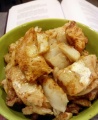 Bigosek z ryby
 -
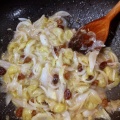 Cebula z agrestem i rodzynkami
 -
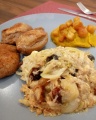 Bigos gotowy!


W kolejnym wpisie zobaczymy, jak dalej potoczyła się historia bigosu – teraz już z mięsem i z kapustą!
Bibliografia
- Dembińska, Maria; Weaver, William Woys (1999) Food and Drink in Medieval Poland: Rediscovering a Cuisine of the Past, University of Pennsylvania Press, Philadelphia
- Skarżyński, Mirosław (2017) Polish (?) Bigos: About the Thing and About the Word w: Essays in the History of Languages and Linguistics, Kraków, s. 609–617, doi:10.12797/9788376388618.37